
Moving Forward With Trust
Designing Human Accountability Into a Gen AI Workflow

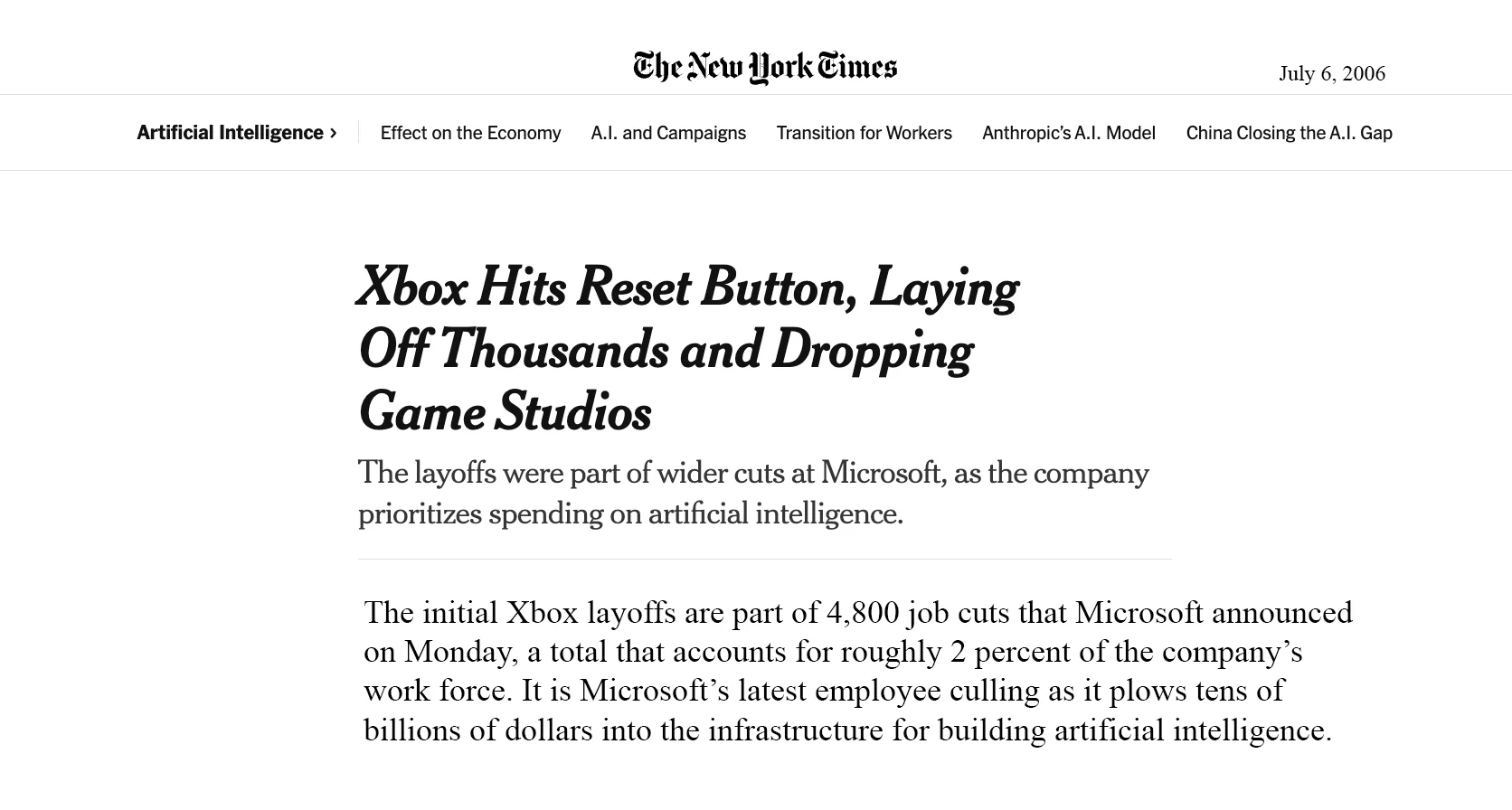
Adoption is not driving return on investment
↑59% report code quality improvements – DORA 2025
↑70% report at least some confidence in generated code quality – DORA 2025
↓Every 25% increase in AI adoption leads to a 7.2% decrease in delivery stability – DORA 2024
↓10x increase in code duplication over 3 yrs – GitClear 2025
↔Negligible increase in delivery throughput – DORA 2025
Software development is a design process
Design is the activity of discovering the right solution under uncertainty. Manufacturing automates the repeated execution of a known solution.
When AI is applied to an undisciplined design process, it speeds up output without improving judgment. You get more of the wrong things faster.
(thank you Mary Poppendieck, author of Lean Software Development)
Plan what you are doing
Act on anything that went wrong to avoid errors of the same nature in future
Do what you said you’d do
Check that you did it right
Developed by Walter A. Shewhart in the 1920’s.
Popularized as part of the Toyota Production System.
Popularized as part of the Toyota Production System.
Step 1: Plan
What is the task, and what does a completed cycle deliver?
Example: “Preparing and sending a weekly status update to your manager and stakeholders.”
Step 2: Do
What requires human judgment that can’t be delegated to AI?
Deciding how much detail on a sensitive risk to share with which audience: what goes to my manager versus the broader stakeholder version
What can AI execute autonomously, with review at defined gates?
AI drafts the metrics section from tracker data, drafts the risks list from open tickets, and drafts a first-pass narrative summary; human reviews all three before anything is sent
What are the irreversible or highest-stakes moments?
Sending the update to external stakeholders: once it’s sent, I can’t unsend a wrong number or a premature risk disclosure
Step 3: Check (part 1)
Name 3–5 specific, observable signals of success.
(1) every shipped item this week is reflected accurately, (2) every open risk above medium severity is named with an owner, (3) every ask names a specific person and a deadline (zero vague asks), (4) I read and edited the final draft myself before it went out.
What are the most common failure modes to prevent?
A real risk gets buried in the details instead of called out up top. The update goes out without me actually reading the final draft. The numbers are stale because the draft used last week’s data.
Step 3: Check (part 2)
What AI behavior should trigger an immediate STOP?
Stop if AI drafts a risk statement about a stakeholder’s team without me reviewing the wording first. Stop if AI sends or schedules the update without my explicit sign-off. Stop if AI uses data older than this week without flagging it as stale.
What are the phase boundaries: “analysis done” and “execution done”?
Analysis done: this week’s tracker data is pulled and I know which risks are still open. Execution done: the full draft exists with metrics, risks, and asks sections complete, before my own read-through.
Step 4: Act
What process debt accumulates when this is repeated?
Skipping my own proofread pass when I’m busy. Reusing last week’s risk list without checking whether anything actually resolved.
What do you want to learn and improve each cycle?
Track which flagged risks never actually mattered, so I get better at judging what’s worth surfacing versus noise.
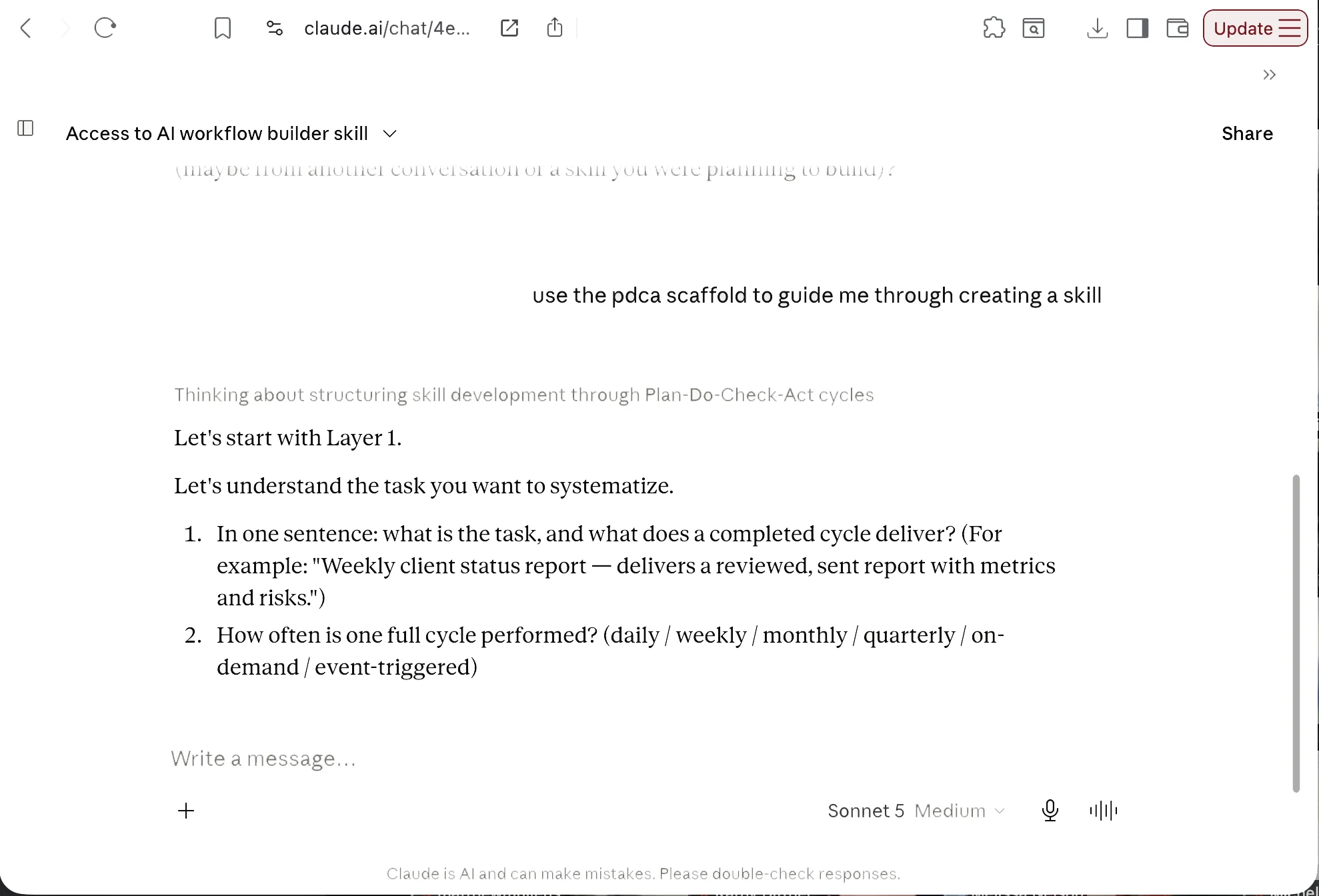
Think through the questions
Run the prompt builder prompt
Evaluate the prompt by doing test run(s)
Use the agent to help you refine the prompt
Refine & iterate
Resources:
inquiry(@)kenjudy.us | kjudy(@)stride.build
Human directed AI workflow skill creator:
https://github.com/kenjudy/human-directed-ai-workflow-builder
Human directed AI workflow prompt creator:
https://github.com/kenjudy/human-directed-ai-workflow-builder
Human directed AI workflow skill creator:
https://github.com/kenjudy/human-directed-ai-workflow-builder
Human directed AI workflow prompt creator:
https://github.com/kenjudy/human-directed-ai-workflow-builder
AI Use Disclosure
I
used Claude for brainstorming, argument review, and drafting assistance across multiple revisions. I personally verified all sources and made all final content decisions. I take full responsibility for the accuracy, originality, and quality of this work. [References]